Last updated: August 10, 2026
- Key Facts – Teacher paychecks usually show gross pay, deductions, and net pay on one stub.
- So do teachers comparing gross pay to take-home pay and wondering why the gap looks so wide.
- Many teachers glance at net pay and stop there.
- Teachers are often paid on a calendar that does not match the school year exactly.
Quick Answer: Most teacher paychecks shrink by 3 broad deduction groups—taxes, retirement, and benefits—and the quickest way to catch trouble is to line up gross pay, each deduction line, and net pay on the same stub. This guide to teacher paycheck deductions explained: taxes, retirement, and benefits shows what usually belongs on the paycheck and what deserves a payroll review if you teach. This article is information, not financial advice; tax and benefit rules vary by country, state, district, and union contract, so a qualified adviser, payroll office, or benefits specialist should review your own situation before you make changes. For official IRS withholding guidance, see IRS Publication 15-T and Form W-4 instructions.
Key Facts
– Teacher paychecks usually show gross pay, deductions, and net pay on one stub.
– The main deduction buckets are taxes, retirement, and benefits.
– A pay stub error can affect tax withholding, coverage, or retirement credits.
– If rules are unclear, consult payroll or a qualified professional before changing deductions.
– For federal tax withholding basics, see the IRS Publication 15-T and Form W-4 instructions.
Who This Applies To — and Who Should See a Professional Instead
Salaried and hourly teachers whose district, school, or employer runs payroll deductions for income tax, retirement, health coverage, life insurance, union dues, and similar items fall here. So do teachers comparing gross pay to take-home pay and wondering why the gap looks so wide.
Need a professional review — not just a general article — if any of these are true: you teach in more than one system, you work part-time in one job and full-time in another, you have a pension plus a separate retirement account, you are covered by a spouse’s plan, or you are changing filing status, residency, or leave status midyear. Those cases can shift withholding, premium eligibility, and retirement contributions in ways a generic explanation cannot safely cover.
A fast self-check helps. If you can answer “yes” to all three, you can usually follow the rest of this guide yourself: you have your latest pay stub, you know your gross pay, and you can access the payroll or benefits portal. No stub? Stop there and gather it first.
The aim is not to guess what “should” be on your paycheck. It is to spot what is actually being deducted, why it is there, and where a mistake could cost you money or coverage. A missing retirement deduction can change future benefits. A wrong tax withholding can leave you short at filing time. A benefit error can create a gap in medical or dental coverage.
The Step-by-Step Process for Teacher Paycheck Deductions Explained: Taxes, Retirement, and Benefits (Done Correctly)

- Start with gross pay, not take-home pay. Find the amount before deductions on your pay stub. Then list each deduction line separately. Check that the gross pay matches your contract, timesheet, or stipend record. A problem shows up if overtime, extra duty pay, or summer pay is missing.
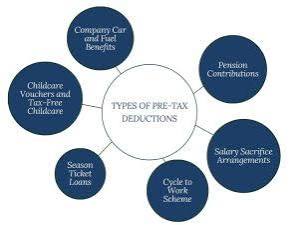
- Separate pre-tax and post-tax deductions. Pre-tax items usually reduce the income subject to tax; post-tax items do not. Check which deductions are labeled pre-tax, after-tax, or taxable benefit. If the category is unclear, ask payroll or a benefits specialist to confirm before you assume the tax treatment is correct. IRS Publication 15-B explains how employer benefits may be taxed.
- Identify income tax withholding. Check federal, state, provincial, or local tax lines, depending on where you work. Review your withholding settings in the payroll system and compare them to your filing status, number of dependents claimed, and any extra withholding request. A problem is any mismatch between your current life situation and the form on file. See IRS Form W-4 guidance for federal withholding.
- Check retirement contributions and plan type. Confirm whether the deduction goes to a pension plan, defined contribution plan, or both. A defined contribution plan is an account funded by contributions; a pension is a formula-based benefit paid later. Review the contribution rate, whether it is mandatory, and whether the employer also contributes. A problem is a missing contribution or a deduction that exceeds the plan rules. Your plan’s summary should spell out the rates; if it does not, ask payroll or the plan administrator.
- Review health, dental, vision, and other benefits. Make sure each premium matches the coverage level you selected: employee only, employee plus spouse, family, or similar tiers. Check the effective date, deduction schedule, and whether coverage started or ended when expected. A problem is paying for coverage that has not started or has already ended.
- Look for specialty deductions. These can include union dues, disability insurance, life insurance, parking, flexible spending accounts, charitable payroll deductions, loan garnishment, or wage assignments. Check that each item is authorized and that the amount matches the election or order. A problem is any deduction you do not recognize or did not approve.
- Reconcile net pay against the payroll formula. Subtract all deductions from gross pay and compare the result to the net pay deposited in your bank account. Check that rounding differences are minor and explainable. A problem is a gap that does not match the listed deductions, which can signal a payroll error.
- Check year-to-date totals and annual limits where they apply. Year-to-date columns show how much has been withheld so far. Check that retirement, benefits, and tax amounts are accumulating as expected. A problem is hitting a contribution cap too early, or never approaching one when you should be, because that can indicate an input error.
I put the steps in this order for a reason: payroll errors are easier to catch when you start with the biggest numbers and then narrow down. Many teachers glance at net pay and stop there. Small mistakes love that shortcut. They can sit unnoticed for months.
Critical Checkpoints: What to Verify Before Moving Forward
First, check your pay schedule. Teachers are often paid on a calendar that does not match the school year exactly. If your contract spreads salary over twelve months, your summer pay may be part of the annual schedule rather than extra income. Check whether deductions continue in unpaid months or pause during breaks.
Next up, review the tax forms on file. Your withholding elections can go stale after marriage, divorce, a second job, a move, or a change in dependents. If your withholding is based on an old form, the problem may not show up until tax filing time. The real question is whether the payroll system reflects your current filing status and any extra withholding you intentionally requested.
Then inspect retirement rules. Some teacher systems use mandatory employee contributions. Others have optional salary deferrals into a retirement account. A salary deferral is money taken from pay and sent into a retirement plan before you receive it. Check whether your contribution is a percentage of salary or a flat amount, and whether it applies to base pay only or also to stipends and coaching pay.
For benefits, check the coverage tier and the deduction timing. A common issue is a lag between enrollment and the first premium deduction. Another is paying twice because a prior plan was never terminated. Confirm the effective date, end date, and whether the payroll deduction matches the benefit confirmation notice.
Finally, check taxable versus non-taxable treatment. Some benefits reduce taxable wages; others do not. That distinction matters because the same deduction amount can have different tax effects depending on how it is coded. If the coding is fuzzy, ask payroll to explain the deduction category in plain language, and consult a qualified professional if you are unsure. IRS Publication 15-B is the best starting point.
Warning Signs: When to Stop and Get Help

Unknown deduction label: A line item appears on your stub and you cannot tie it to a benefit, tax, or authorized offset — contact payroll before the next pay cycle.
Retirement money missing for more than one pay period: Your elected contribution is not being taken or not being posted — ask the retirement plan administrator and payroll to confirm both the deduction and the deposit.
Health coverage deduction with no coverage confirmation: You are paying premiums but never received proof of active enrollment — stop and verify with benefits administration, because you may be exposed if care is needed.
Tax withholding suddenly drops or spikes without a life change: Your withholding changes for no clear reason — review the form on file and check for a data-entry error.
Garnishment or levy appears unexpectedly: A court or agency order has been applied to wages — do not ignore it; read the notice and seek legal or payroll help immediately.
Net pay does not match listed deductions: The math on the stub does not reconcile — request an itemized explanation, because payroll coding, proration, or timing may be wrong.
The Most Common Mistakes (and Their Real Consequences)
One common mistake is treating every deduction as “bad” and trying to remove it without checking what it funds. The consequence can be loss of insurance, missed retirement saving, or a tax problem. Better to identify each line and confirm its purpose before making changes; if the deduction is not obvious, consult payroll or a qualified adviser.
Another mistake is assuming payroll withholding equals your final tax bill. Withholding is only a prepayment. Ignore that, and you can still owe more at filing time or receive less back than you expected. The better approach is to review withholding after life changes, not only at tax season.
A third mistake is overlooking the difference between a pension deduction and a voluntary retirement contribution. A pension is often part of employment; a voluntary plan is usually a choice. Mix them up, and you may try to stop a mandatory deduction or forget to enroll in a plan you meant to use.
A fourth mistake is failing to compare enrollment forms to pay stubs. Benefits elections and payroll deductions can diverge after a system update or job change. The consequence is paying the wrong premium rate or carrying the wrong coverage level. The fix is to compare the benefit confirmation with the payroll deduction, line by line.
A fifth mistake is ignoring year-to-date totals. If you do not watch them, you can miss contribution limits, over-withholding, or a deduction that never starts. The correct alternative is to check cumulative totals at least a few times during the year.
A sixth mistake is waiting until tax time or open enrollment to ask questions. By then, some corrections are harder to reverse. The consequence can be delayed refunds, benefit gaps, or payroll adjustments spread across future checks. The better move is to flag an issue as soon as you see it.
Edge Cases and Modified Approaches
Some situations need special handling. If you work in multiple districts or have a second job, withholding from one paycheck may be too low even if each employer looks correct on its own. In that case, you need to review total household income, not a single stub, and ask payroll or a tax professional how the deductions interact.
If you are paid over only part of the year, deductions may be spread unevenly. Summer checks, leave without pay, and substitute assignments can all distort percentages. The adjustment is to compare annual totals, not just one paycheck.
If you are on unpaid leave, a long-term substitute assignment, or a partial contract, some benefits may continue only if you pay premiums directly. That changes the cash flow and the risk of a lapse. Check whether the employer is still deducting premiums or whether you must arrange payment another way.
If you receive stipend pay for coaching, tutoring, or club sponsorship, that income may be taxed differently from base salary and may or may not count for retirement contributions depending on plan rules. The exact treatment depends on the employer plan and local law, so confirm before assuming it will be handled like regular wages, and check with payroll or a qualified professional before you rely on it.
If you are close to retirement, deduction choices can affect final service credit, pension calculations, and access to retiree health coverage. This is one of the clearest places to bring in a qualified adviser, because the cost of a wrong assumption can last for years.
What to Expect: Realistic Timeline and Outcomes
Once you understand your stub, the immediate outcome is clarity: you can tell which deductions are taxes, which are retirement, and which are benefits. For many teachers, that alone lowers anxiety because a smaller net pay is not always a payroll mistake.
If you find an error, the fix is usually not instant. Payroll may need a cycle or two to correct the deduction, and some reimbursements or retroactive adjustments take longer. Keep copies of the stub, the enrollment form, and any email or ticket number. Paper trail first. A verbal promise is flimsy.
If everything is correct, your main ongoing task is monitoring. Review each pay stub when something changes: new job, new spouse, new child, moving district, changing insurance, or adjusting retirement elections. In stable periods, periodic checks are usually enough.
The most realistic outcome is not perfect simplicity. Teacher payroll is a stack of rules: tax law, retirement law, benefit contracts, and district policy. My goal here is not to make it look easy. It is to make it readable enough that you can spot what belongs, what does not, and when it is time to ask for help before a small deduction issue becomes a costly one.